How far apart should stereo speakers be?
Two speakers. A little space. A place between them. Start with a balanced triangle, then move closer to hear more of the song and less of the room.
The short answer: start with a triangle
Give the speakers some space. Give yourself a place between them. Start with the left speaker, the right speaker and your listening position forming an equilateral triangle.
For a close-up setup, try about one metre between the speakers and about one metre from each speaker to you. That is an example, not a rule for every pair. The useful part is the relationship: as you move closer, bring the speakers closer together. As you move back, give them more room.
Hear the song before the room joins in
Sound takes more than one path to you. Some travels straight from the speakers. Some meets the desk, the floor or a wall, then returns as a reflection. The direct sound takes the shorter path. It arrives first.
Those reflections still become part of what you hear. A bare wall beside one speaker, or a broad desk beneath both, can change the balance. Sitting closer generally gives the direct sound more weight relative to the room’s reverberant sound. You hear more of what comes straight from the pair.
This is the idea behind near-field listening. Not a room that disappears. A closer relationship with the music. It can help the space between instruments feel easier to follow, even when the room is not a studio.
You may come across the term ‘critical distance’. It describes where direct and reverberant sound are equal in level—not a boundary where reflections suddenly arrive. That distance depends on the room and the speaker. There is no single metre mark that works everywhere.
The voice in the middle
Put on a familiar stereo recording with a voice mixed in the centre. Sit an equal distance from the two speakers. The voice can seem to stand between them, even though nothing is there.
That is the phantom centre. Two speakers making one apparent place for the voice. Sounds mixed to the left and right have their own places around it. The space is part of the song.
Move a little to one side and listen again. The centre may move with you. A balanced position helps it settle; the recording and the room still have a say.
How close is too close?
Closer is not always better. Different speakers are designed for different listening distances. With some multi-driver speakers, you need enough distance for their drivers to be heard as a balanced whole. Follow the maker’s placement guidance where it is available.
A very small triangle also makes a small movement of your head a larger change in position relative to the pair. Leave yourself room to sit naturally. There is no universal minimum of 80 centimetres, and no fixed near-field sweetspot that suits every speaker.
Find your place
Start where you want to sit. Place the speakers apart, at a similar height and an equal distance from you. Keep their fronts clear. Aim them towards you as a starting point, unless their own instructions say otherwise.
Listen to that familiar centred voice. If it pulls to one side, check your position, the playback balance and whether one speaker is blocked or much closer to a wall. Then make a small adjustment. Move one thing. Listen again.
If the desk or room seems to dominate, try bringing the whole triangle closer to you, or changing the speakers’ height or position on the surface. You do not need a perfect room. You need a starting point, and a little room to adjust.
Space that moves with you
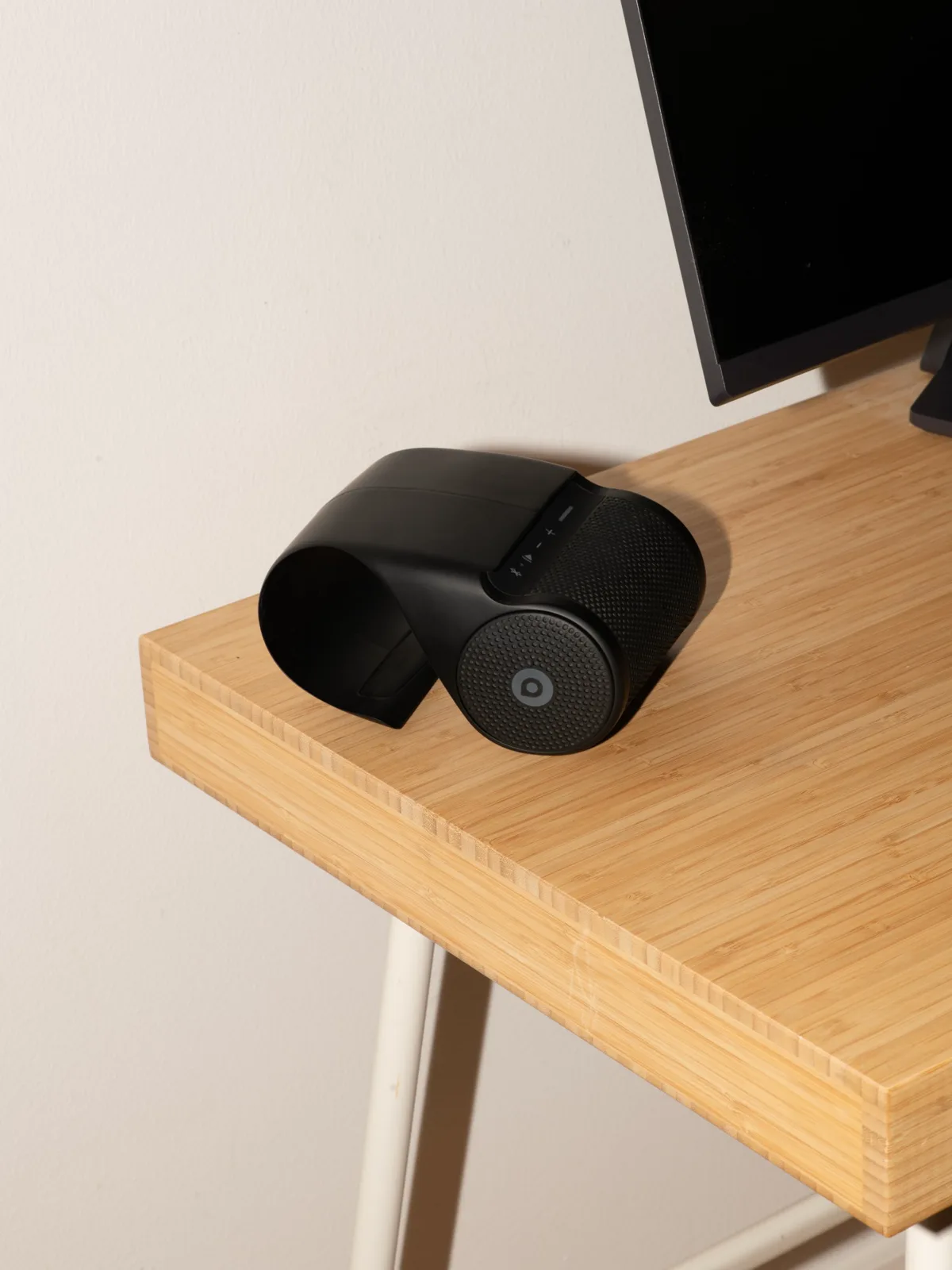
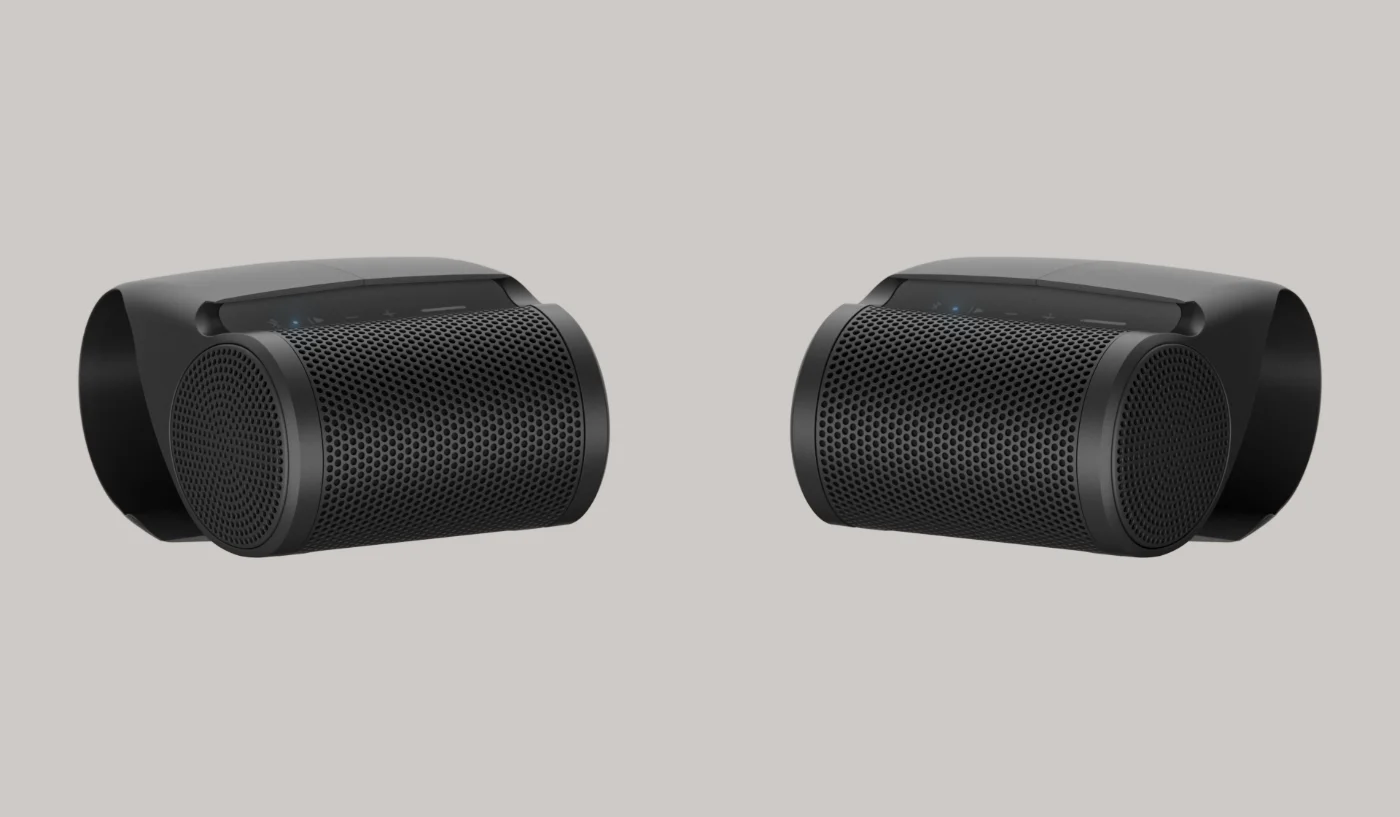
CoAudio OneTwo is carried as one and opens into two speakers you can place apart. On a desk. On a hotel-room table. Wherever there is room for a left, a right and you between them.
The guidance here is a starting point for stereo listening, not a measured OneTwo setup. Begin with the triangle. Listen to the centre. Let the space open.