Stereo vs mono speakers: what you actually hear
What mono and stereo change in music and films, why speaker spacing matters, and when one channel is enough.
Mono carries one audio channel. Stereo carries two: left and right. Through speakers placed apart, stereo can give voices, instruments and effects different positions between them. You can hear the difference in music, and when watching a film on a tablet or phone.
What changes between mono and stereo?
In mono, all the sound shares one channel. A voice, drum and guitar can still be distinct, but they do not have separate left-to-right positions. In stereo, the mix can place a guitar on the left, another instrument on the right and a vocal in the centre.
A voice sent equally to both speakers can seem to come from the middle. That centre image depends on the recording, speaker placement and where you sit. Not every track has a wide mix, and stereo playback cannot add positions to a mono recording.
Channel count is not a measure of sound quality. A good mono speaker can sound clear and balanced. Stereo adds the possibility of a left-to-right image, not automatically better bass or more detail. Two speakers playing the same mono channel are still mono.
Watching a film on a tablet or phone
Place a stereo pair on either side of a tablet or phone, and a film’s sound can extend beyond the screen. Dialogue mixed centrally can stay near the picture, while music and effects reach to either side. For some viewers, that wider sound makes the small screen feel bigger. The picture has not changed; the sound around it has.
This needs a stereo soundtrack and a playback setup that preserves both channels. It is not surround sound. With wireless speakers, also check that speech stays in sync with the picture; noticeable delay can distract from the film.
Can one portable speaker play stereo?
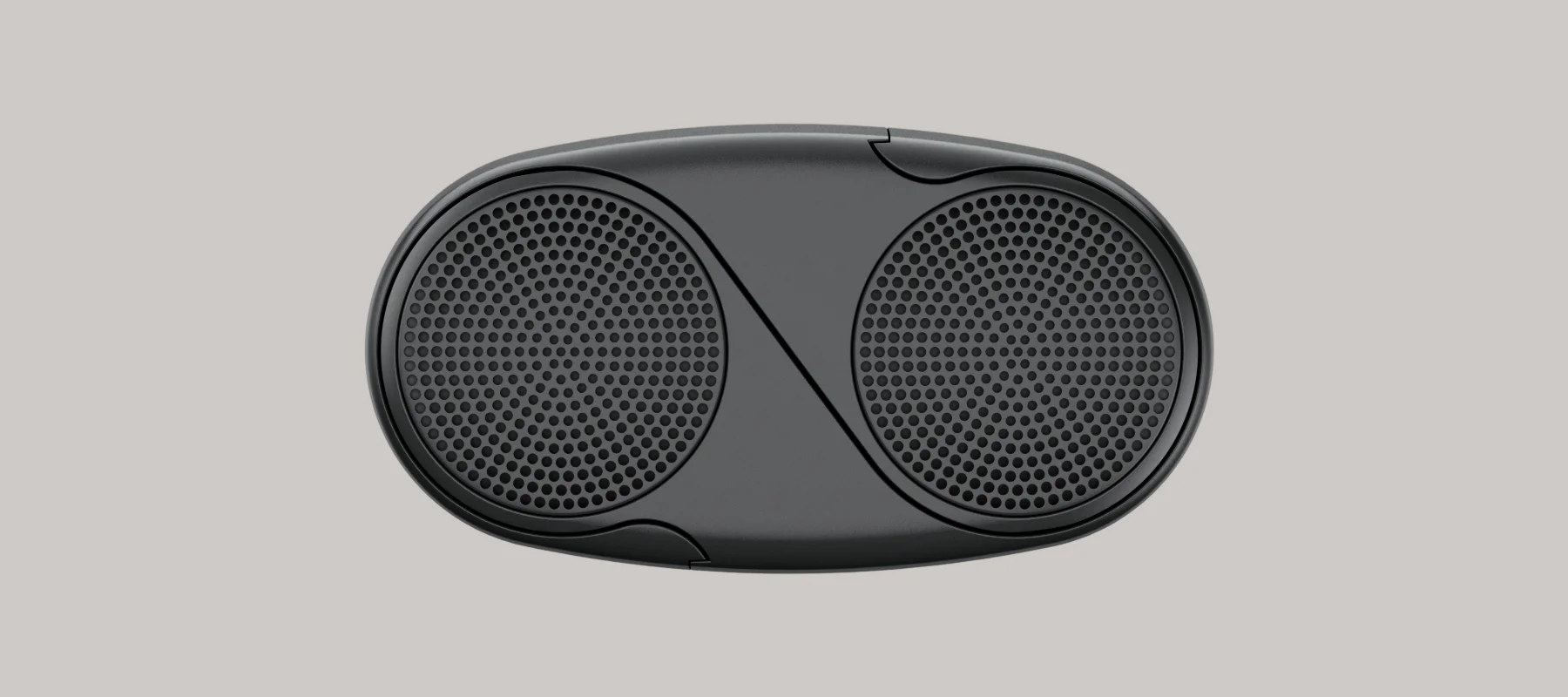
Yes. Some single-box speakers have separate left and right drivers; others combine the channels into mono. Driver count alone does not tell you which you are hearing.
Drivers close together are not the same arrangement as two speakers placed apart. The width you hear depends on their spacing, the speaker design and your listening position, not just the stereo label.
When mono makes sense
For speech-led podcasts or background listening, stereo separation may not matter much. Mono can also be useful when listeners are spread across a space. With stereo, someone close to one speaker may hear mainly that side of the mix.
Try a simple listening comparison
Choose a familiar stereo track. Place the speakers apart, roughly the same distance from you. Listen for a centred vocal and sounds to either side, if the mix includes them. Move a little to hear how the balance changes.
If your system has a mono setting, switch between the two at a similar volume. Focus on where sounds appear, not which version seems louder. Using different speakers changes more than the channel arrangement, so it is not a clean mono-versus-stereo test.
A portable stereo pair
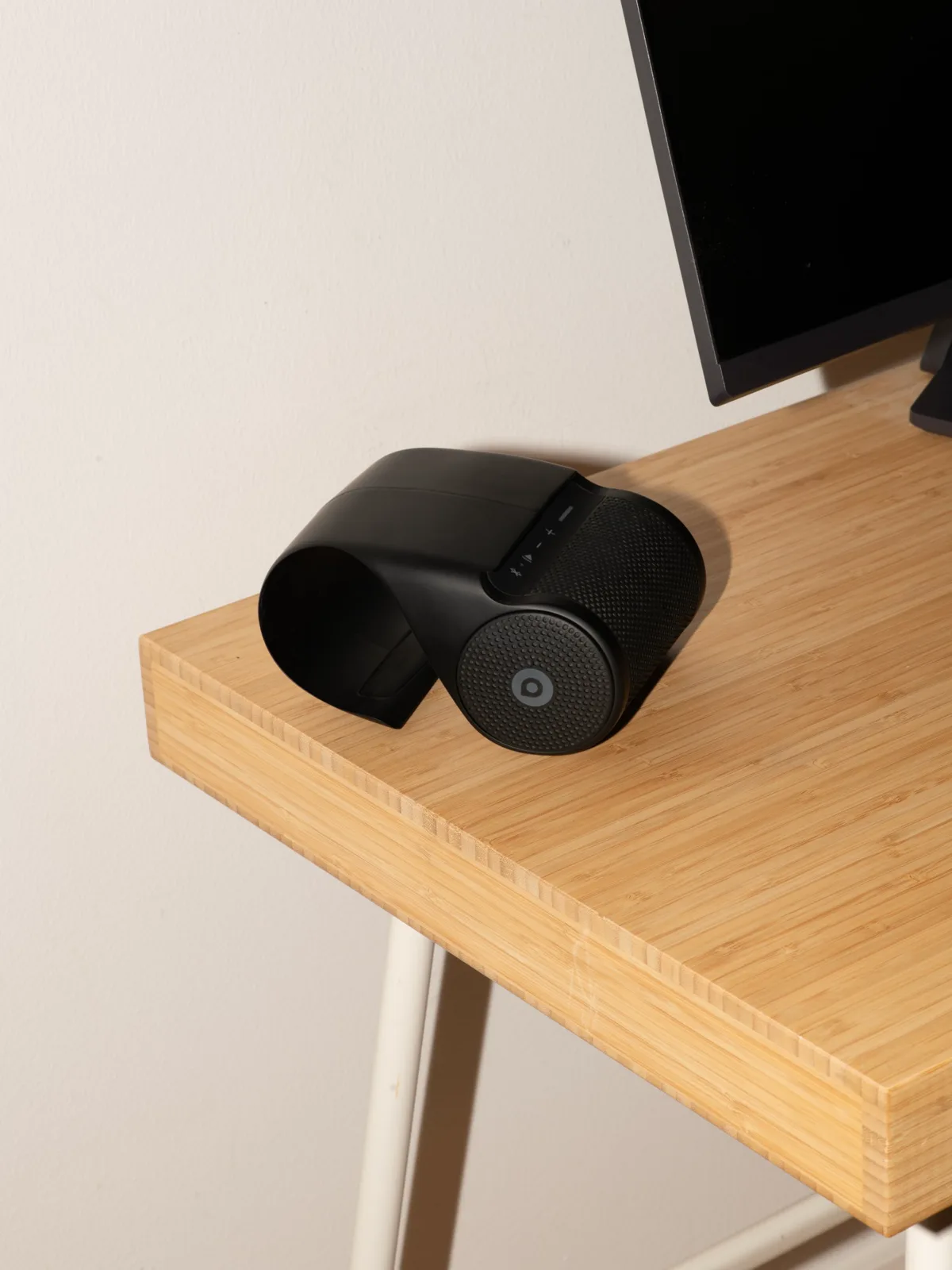
CoAudio OneTwo is one portable speaker that opens into two. Carry it together, then place the two speakers apart for separate left and right sound sources. A stereo pair without two separate objects to carry.